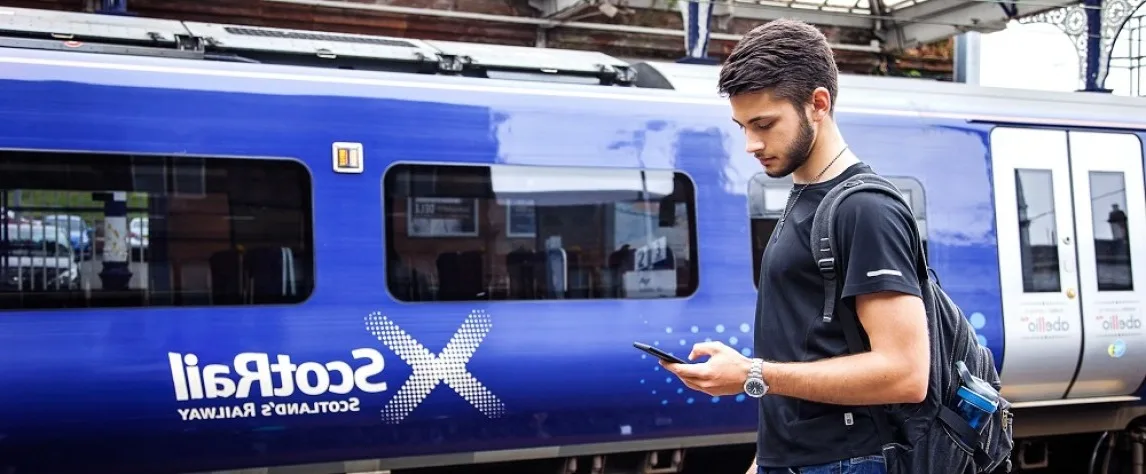

When ScotRail’s new app launch replaced Trainline and cut over on a single day, release engineering basics — phased rollouts, load testing, and test automation on critical paths — appeared to stay on paper.
This app migration case study looks at what reporting and passenger experience tell us about getting high-stakes launches right.
On Thursday 30 July 2026, ScotRail replaced its Trainline-provided booking system, launched an entirely new mobile app, and asked passengers to migrate — all at once.
The response
Within hours, the operator was apologising. Passengers reported being locked out of accounts, waiting on password-reset emails that never arrived, searching for trains that didn’t appear, and in some cases paying for tickets that never showed up in the app. Chief operating officer David Ross told BBC Radio Scotland that problems began when “thousands and thousands” of people attempted to switch at the same time, creating a backlog and intermittent technical challenges. Suppliers, he said, were working round the clock.
ScotRail also said it had been “doing lots of testing work” and coordinating with Apple and Google on store availability. Ross described the underlying issues as “background infrastructure challenges” related to moving away from Trainline, and committed to reviewing lessons learned.
The catalyst
I wrote about this on LinkedIn at launch — and the scale of the response told its own story. Engineers, architects, and commuters alike weren’t debating whether migrations are hard. They were asking a simpler question: in 2026, how does a flagship public transport app still fail this many critical paths on day one?
This article expands that thread: what the reporting says happened, what modern release engineering practice would expect, what passengers and practitioners observed in the weeks that followed, and what it all implies for trust in Scotland’s rail digital services. I write about product reliability, QA engineering, and delivery from DigiAye — a freelance practice focused on full-stack and mobile development for teams that need launches to work under real traffic.
What the reporting says happened
Platform coupling. ScotRail did not ship an update to an existing app. It replaced a third-party booking platform (Trainline) with a new internal one, and launched a new App Store listing — “ScotRail New Official App” — on the same day the old app stopped selling tickets. The migration required new passwords, re-entered payment details (saved cards did not transfer), and a fresh download for anyone who wanted to book via mobile.
Store timing. Passengers were emailed earlier in the week that they would need the new app from Thursday. According to BBC reporting, the app was not available to download ahead of launch day — meaning the first mass install, first mass login, and first mass booking attempt all collided with the cutover itself.
Identity and account flows. Users faced forced password resets, long delays for reset emails, and difficulty linking existing details — including payment methods and Railcards.
Booking and fulfilment. Trains not appearing in search results, website booking also failing to show availability, and cases where payment succeeded but the ticket did not appear in the app.
Operator response. ScotRail extended the window during which the old app could still sell tickets (initially until midday — a detail that prompted more than one sardonic comment about pushing failure onto the “late shift”), apologised, and attributed failures to volume and infrastructure transition. Ross characterised some issues as glitches reasonably associated with a new app launch.
Passenger expectations. At least one quoted complaint in BBC coverage explicitly asked why ScotRail did not pursue a controlled rollout to a selected area first.
What the industry noticed
Launch-day failures rarely stay inside the operator’s press office. They spill into public conversation — and ScotRail’s rollout drew a large, unusually technical audience. What follows isn’t insider knowledge. It’s the recurring shape of the response: what people kept coming back to, and what that suggests about how the launch was read from the outside.
Craftsmanship and the minimum bar
A common refrain was blunt: where’s the pride in getting it right the first time? Another version of the same thought arrived as a simple question — so you’re saying they didn’t test enough?
That matters. It wasn’t only commuters venting. It was the instinct of people who build consumer software and know what a baseline release looks like — automated tests, staging parity, smoke checks before you open the doors.
The localhost redirect
One of the more striking anecdotes circulating after launch: a password reset flow that reportedly redirected to `http://localhost:3000`.
If true — and enough people reacted to suggest it wasn’t a one-off misunderstanding — that isn’t a subtle defect. It’s a configuration error: development or staging URLs surviving into production. The sort of thing a basic end-to-end pass catches in minutes. There were wry jokes, too, about bugs being waved through because they “worked on my machine” — familiar to anyone who’s inherited a release signed off without running the journeys users actually take.
I wasn’t in the war room. Most commentators weren’t either. But `localhost` in a password reset chain is the kind of detail that makes outside observers stop accepting “intermittent infrastructure challenges” at face value.
Phased rollout wasn’t exotic — it was optional and skipped
Another recurring question: why not phase the new app in over weeks rather than switch everything at once? Related point — ScotRail still relies on m-tickets rather than e-tickets in many flows, so when digital fails, the fallback isn’t always “open your phone.” It’s a visit to a ticket machine. Digital failure at the gate feels different when the backup is physical.
On Smartcards, a line from the follow-up discussion captured the mood well: “It’s core functionality, temporarily gone, with no clear timeline.” The frustration isn’t only breakage. It’s not knowing when Monday morning works again. Phased rollout was available. Controlled exposure was available. With months of advance warning, many felt the cutover still looked undercooked.
Timing
A simpler question kept appearing in domestic conversation, not just engineering threads: why launch in the middle of the Commonwealth Games? Whether or not that event materially changed rail demand, it touches a basic release principle — calendar risk. Major cutovers are usually steered *away* from known peaks unless readiness is exceptionally solid. Public reporting didn’t suggest that bar had been met.
White-label and who actually ships
Some commentary focused on who builds what. From the outside, ScotRail appears to rely heavily on external platform infrastructure — auth endpoints, retail tooling, vendor-shaped auth configuration — associated with specialist rail-retail suppliers such as SilverRail. Surprising to some, given ScotRail itself employs a sizeable IT organisation.
Others described the app as feeling white-label: ScotRail’s brand on the surface, less clear ownership underneath. That shifts the question from “bad code in one team” to “who held release authority, who set go-live criteria, and who signed off parity on Smartcards, auth, and ticket fulfilment?” Passengers see one logo. Failures still land there.
Procurement and place
My initial post wondered aloud whether local delivery — teams with everyday stake in the service — might have weighed reliability differently. That drew pushback worth keeping.
One line of response: geography isn’t destiny in a remote-working industry; a distant supplier may still employ capable people across the country. Fair. The sharper question isn’t postcode. It’s contract shape — governance, acceptance criteria, what “done” meant before go-live.
Another line ran the other way: Scotland’s tech capacity is not the bottleneck here; how work gets procured might be. A view I share from the thread: when tenders optimise for lowest price on a fixed date, passengers sometimes receive exactly that — not malice, not necessarily incompetence, but incentives misaligned with commute-grade reliability.
The fair read: hard migration, real constraints
Charitably, this was never going to be a quiet Thursday deploy.
Replacing a commercial booking engine touches accounts, fares, payments, ticket rendering, Railcards, website parity, app store listings, and Smartcard fulfilment. Store review timelines with Apple and Google are real. Trainline’s exit and a new supplier’s entry create natural big-bang boundaries.
ScotRail’s COO essentially confirmed a predictable load spike. Testing, they say, happened. Infrastructure transition is genuinely messy.
A fair process critique therefore isn’t “you should never have bugs.” It’s:
Even accepting that testing occurred, release readiness and rollout design did not appear aligned with the coupling complexity and traffic shape of go-live.
That gap — between “we tested” and “we tested *this* under *these* conditions” — is where fair commentary lives.
The skeptical read: method mismatch
Move one step further, and the launch pattern maps to practices the industry has spent a decade learning not to combine.
No phased rollout — or none visible
Modern releases use geographic phasing, canary traffic, feature flags, and parallel running until parity is proven. BBC reporting and practitioner commentary describe the opposite: fixed calendar cutover, mass notification, store listing unavailable until launch day, and clustered failures across auth, search, payment, and fulfilment.
Reported failures clustered across acquisition (no pre-download), authentication (password reset backlog; alleged localhost redirect), account linkage (payment details, Railcards), discovery (missing trains in search), commerce (payment taken, no ticket), and web parity (website booking also failing). That’s not one missed edge case. It’s systemic readiness.
“Thousands and thousands” is a load test you can schedule
If volume caused backlog, the question isn’t “why did users show up?” but “why wasn’t that traffic shape exercised before we invited them?” Commuter operators know their active user base. A mandatory migration email guarantees a thundering herd on downloads, password resets, and booking APIs.
Test automation and release gates — implied absence
ScotRail says testing work was done. Public outcomes suggest it was not decisive.
In ticketing — as in banking, streaming, or ride-hail — you want automated end-to-end tests on login, search, purchase, refund, and ticket render; contract tests between app and booking engine; synthetic monitoring before traffic; defined rollback when failed purchases spike.
The broader point from the launch discussion: QA engineering and robust test automation in ticketing aren’t novel. Trainline itself operated the previous platform. The industry knows how to do this. A comprehensive strategy doesn’t just prevent bugs — it safeguards brand trust. ScotRail’s launch traded a chunk of that trust on day one.
The harder read: coordination, accountability, and what passengers actually feel
Harsher framing is warranted when tied to evidence — and passenger impact supplies it.
People described the experience as shambolic. Reports included password emails that never arrived and bookings that vanished after payment. For commuters who depend on digital tickets, that’s rational anger — not impatience.
Three facts stand out:
1. The cutover was planned, not accidental. Published dates, customer emails, and messaging about simpler, faster, more reliable travel collided with a day of multi-path failure.
2. Timeline choices amplified risk. No pre-download, Smartcard suspension before go-live, shortened then extended old-app purchase window, Commonwealth Games period — each defensible alone; together they maximise pressure on support and systems.
3. Apologies help; they don’t restore trust mechanics. ScotRail’s honesty is appropriate. But passengers compare public transport apps to Trainline, Uber, and others where wallet, account, and receipt flows are solved problems. They don’t experience “background infrastructure challenges.” They experience missing tickets at the gate.
The craftsmanship thread from the launch discussion sticks because it reframes accountability without needing inside knowledge: professional pride means not shipping auth flows that smell of staging config, and not asking an entire country to be your final QA stage.
Aftermath: Smartcards, timelines, and broken parity promises
Login issues reportedly improved after launch. Credit where it’s due.
But Smartcard customers — often season and weekly ticket holders — were not an edge case. They were core users.
Before go-live, ScotRail told Smartcard customers that online Smartcard delivery would be temporarily unavailable from 27 July, then return when the new app launched on 30 July. Post-launch, The Herald and The National reported a different reality: existing Smartcards could not be loaded in the new app, Smartcard delivery remained unavailable when purchasing, and restoration could take “a number of weeks” with no firm date.
Post-launch commentary kept returning to season ticket and Smartcard holders — and to the absence of a timeline. People can plan around known inconvenience. Open-ended regression breaks the rhythm of a commute built around a card in your wallet.
ScotRail’s own guidance previously called the app “the best way to load tickets to your Smartcard, from the comfort of your home.” Removing that for weeks — after messaging implied restoration at go-live — is a feature parity failure, not a volume spike.
That reinforces the central thesis: critical journeys were not held to a go/no-go bar before cutover.
Why an entirely new app? A structural footnote
This was not an in-place upgrade. ScotRail launched a new store listing and deprecated purchase in the old one.
Sometimes that is product strategy. Sometimes it is practical constraint — when a prior supplier holds App Store or Play Console developer accounts, signing keys, and listing ownership, evolving the existing app in-house is not always straightforward. The path of least resistance becomes a greenfield build and a forced migration for every user.
Combined with white-label platform delivery, you get a familiar pattern: multiple vendors, one public logo, diffuse release ownership. Users see ScotRail. Engineers see auth domains, third-party retail platforms, and store listings that may not have been operated by the people in the room when go-live was called.
Transparency about that structure would not excuse Smartcard gaps — but it would help explain why a transition that elsewhere feels incremental here looks like a full reset.
What “good” looks like — and what Scotland’s tech sector could offer
Private operators treat release discipline as table stakes because failed journeys hit revenue. Public operators face the same expectations with more scrutiny — and, many argued in the launch discussion, with delivery capacity closer to home that procurement models don’t always favour.
I’m not claiming local guarantees quality. Remote teams can excel. I am claiming that governance, stake in outcomes, and weighting reliability over lowest bid change what gets shipped — and that this launch’s shape is consistent with the wrong incentives winning.
Every release sends a message: *we respect your time.* When login, search, payment, and Smartcard loading fail in the same fortnight — with `localhost` anecdotes in the auth flow and no restoration timeline for core features — the lasting impression is not “complex migration.” It is reliability treated as phase two.
ScotRail says it will learn lessons. The constructive version names engineering controls: which automated journeys, which rollout gates, which parity criteria, which rollback thresholds — so Scotland’s passengers are not the final test environment.
Related reading on DigiAye
- AI as Your Developer Sidekick, Not Your Killer — on engineering craft, tooling discipline, and getting things right before you ship
- DigiAye services — release engineering, test automation, React, and AWS delivery for high-stakes products
Planning a migration or launch with similar risk? Get in touch.
Closing thought
Two LinkedIn posts, hundreds of comments, and the same themes kept surfacing: phased rollout was available; auth and config mistakes shouldn’t reach production; opaque vendor layers blur accountability; open-ended timelines erode trust faster than bugs alone.
From a digital development perspective, ScotRail’s rollout is useful because it is legible: reported facts and practitioner observations map cleanly onto known anti-patterns — big-bang cutover, store-timing risk, critical-path failure, parity regression after promised restoration, and procurement dynamics that may prize cost over commute-grade reliability.
Modern engineering gives us the tools to avoid making passengers the canary. The question this episode leaves is whether those tools lived in a slide deck — or in the release pipeline. For more on building software that survives production, browse the DigiAye blog or read about how I work with teams on delivery and reliability.
Sources & further reading
News reporting
- BBC News — ScotRail apology as passengers unable to book tickets in app launch chaos
- The Herald — New ScotRail app can't load Smartcards, operator confirms
- The National — ScotRail issue update for Smartcard customers using new app
- STV News — Why has ScotRail launched a new app and website?
Operator communications
Community commentary
- Themes summarised from public discussion following the author’s posts (July–August 2026). Anecdotes such as the alleged `localhost:3000` password-reset redirect are reported as circulated commentary, not independently verified.